
Monks Erased an Archimedes Manuscript, and Science May Have Lost Centuries


Key Takeaways
- Heiberg uncovered Archimedes’ erased work in 1906 beneath a medieval prayer book.
- Archimedes’ manuscript sold for $2 million in 1998, opening the door to modern imaging.
- Archimedes’ ideas predated Newton and Leibniz by 1,800 years, raising preservation questions.
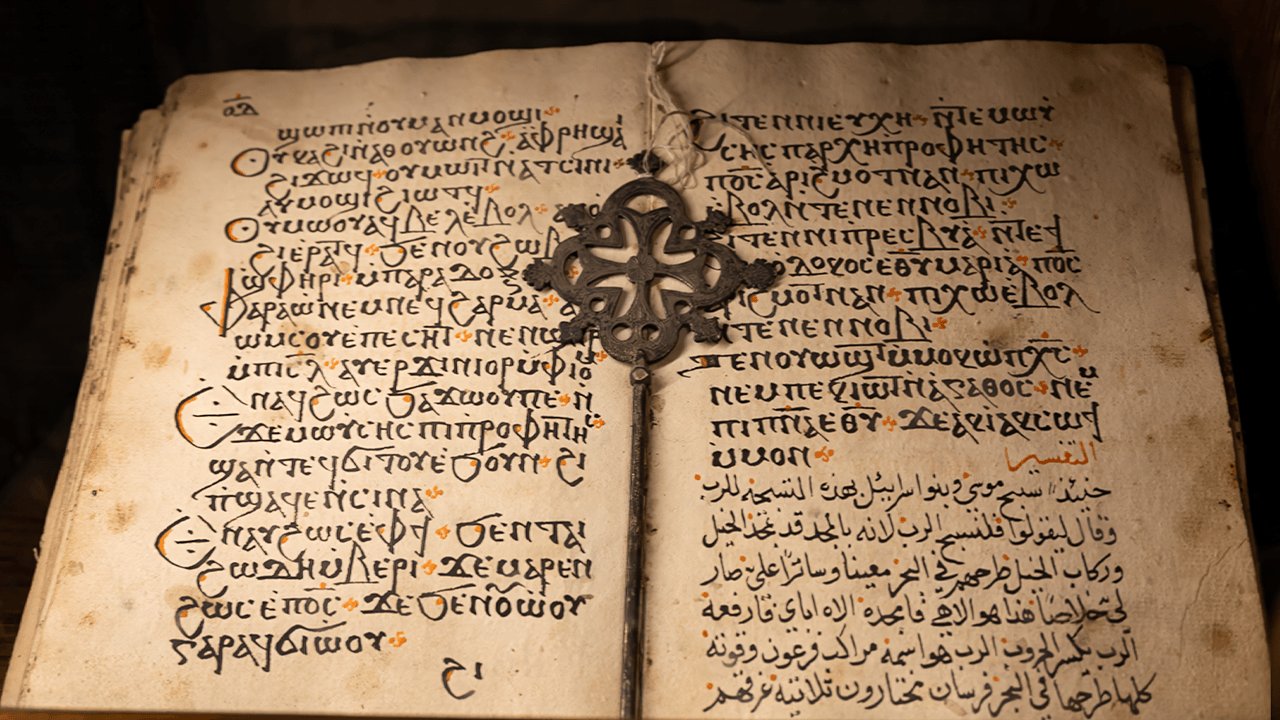
A prayer book traced back to Constantinople turned out to be a palimpsest, its parchment recycled by monks who overwrote a hidden trove of Archimedes’ work. When Danish philologist Johan Ludvig Heiberg examined it in 1906, he found faint remnants that would later be identified as “Method of Mechanical Theorems.” The manuscript resurfaced at auction for USD 2 million, and modern ultraviolet, infrared, and X-ray analysis pulled the erased text into view. What it shows is uncomfortable: Archimedes had laid mathematical foundations in combinatory mathematics nearly 1,800 years before Newton and Leibniz.
A monumental mind, still speaking to Silicon Valley
Every so often, the tech world gets a reminder that progress is not a straight line. Long before cloud computing or chip roadmaps, Archimedes was sketching ideas about areas, volumes, and infinity that feel surprisingly familiar to anyone who has watched modern math power software, engineering, and today’s AI boom. Then much of that work nearly vanished for good.
The part that grabs me, even as we track quarterly earnings and model releases, is how close we came to losing a key artifact of human computation. Not in a fire or a war, but in a mundane act of reuse. That’s a lesson that still lands in an era when knowledge lives on fragile storage, shifting formats, and expiring links.
When parchment was expensive, knowledge became erasable
In medieval times, parchment was valuable enough that scribes sometimes scraped older manuscripts clean and wrote new text over them. The result is a “palimpsest,” basically an ancient version of overwriting a hard drive. In this case, religious writings from the 1200s were layered on top of older Greek mathematics, dimming the original ink into near invisibility.
The hidden text included “The Method of Mechanical Theorems”, a work that shows Archimedes reasoning in ways that anticipate techniques later formalized in calculus. The frustrating part is the timing: many of the mathematical tools associated with Isaac Newton and Gottfried Wilhelm Leibniz might have had a much longer runway if the underlying ideas had stayed legible and widely copied.
A scholar’s lucky find, and a $2 million rescue
The manuscript’s second life began in 1906, when Danish philologist Johan Ludvig Heiberg noticed faint traces of an earlier text beneath a prayer book. His careful work identified it as Archimedes, but the physical object itself would later slip out of view again.
It resurfaced dramatically at auction in 1998, selling for $2 million to an anonymous buyer. For anyone used to splashy valuations in venture capital, $2 million sounds almost modest. But in terms of scientific value, the sale effectively put a price on recovering lost source code from antiquity.
Modern imaging, old ideas, and a very current warning
What finally unlocked the palimpsest was not another lucky hunch, but tooling. Researchers used ultraviolet, infrared, and X-ray imaging to separate layers of ink and reveal text that the human eye could not reliably parse. It’s a familiar pattern in American tech: better sensors, better computation, better extraction of signal from noise.
And it raises one uncomfortable question for our own time: if a scraped parchment can hide centuries of math, what are we accidentally erasing today through neglected archives, obsolete file formats, or data locked behind proprietary systems?



